Showing posts with label Tokyo. Show all posts

Sunday, May 31, 2015

Tsugi wa? (What's next?)

What's next is that I am back in Japan.


That's the view from the 8th floor of a hotel room in Ueno, Tokyo, taken last Saturday night the 23rd of May, after an izakaya dinner with my Polyglot colleagues, Stef and Dan.

The next day we piled into a charcoal-coloured van with our fellow artists, Aachi Cocchi musicians Izumi-san and Tomoya-san, and the director of Aachi Cocchi, Mikako-san. Our tour manager, Lang Craighill, drove us north up the Tohoku Expressway to the town of Minamisanriku.

Polyglot have visited this town twice before,  the first time only months after it was ravaged by the March 2011 tsunami. This time we are working with residents of temporary housing, and then school children at the Iriya Elementary School, to produce a mega kamishibai which we will perform at Minamisanriku kindergartens next week. Aachi Cocchi (it means 'here and there') have been presenting classical music, opera and dance 'cafe concerts' in places affected by the tsunami since 2011 as well. As part of this two week program, called 'Drawbridge: Kids Are The Boss', Tomoya and Izumi have been playing Tchaichovsky, Rachmaninoff, Chopin, Piazzola and Disney for the residents and the students, and then providing live accompaniment for the kamishibai section.


Here's Stef, Dan and I presenting a kamishibai introducing us, which I produced back in Melbourne. It was designed to introduce us and also to be able to performed to the chorus of 'Give Me a Home Among the Gum Trees'. There's Mikako-san translating for us, Izumi-san playing the piano, and Tomoya-san looking on.


Here's Dan and I showing the Iriya students the story that the temporary housing residents had given to us in the previous two days: the residents told us the story, and I drew the pictures as they narrated it. Although an elderly lady did need to get up and correct my picture of the peach floating down the river towards the lady washing her clothes.  The peach, apparently, didn't have enough of a bum-like curve to it...


And here's the image I produced back in April so Mikako-san would have a picture to put onto the flyer advertising the cafe concerts for the temporary housing residents. The middle flag is the Minamisanriku flag.


Thursday, June 21, 2012

What's Japanese for MONGREL?


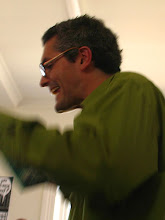
Above, our Tokyo correspondent, English teacher, and dem fine cartoonist J M Schmidt peruses MONGREL 4 at the station. His comics novels* Egg Story (currently being translated into Esperanto!), Eating Steve and The Sixsmiths (this last with writer Jason Franks) are all great books, and recommended for your reading eyes.


Seeing a MONGREL being read in this, the emblematic illustration of the ubiquity of manga culture in Japan ( 'In Japan, people read comics On The Trains! Really!') is highly delightful to me.


See? No-one's staring at the comics-reading gaijin like he's out of his mind or anything.  I have written an introduction to JM's collection of hilarious shorter comics stories, 'All You Bastards Can Go Jump Off a Bridge', which will be published by Milk Shadow Books later this year.

Sugoi.  Domo arigato gozaimasu, Schmidt JM!

*a new and entirely satisfactory way of referring to 'graphic novels', invented (I think) by my friend Anne Radvansky last night

Saturday, February 20, 2010

Legends of Kamishibai


This week just gone, we enjoyed another visit from staff of Tokyo's National Museum of Nature and Science to Melbourne Museum, where I work. Above, with the lyrebird on his shoulder, is Yoshikazu Ogawa, our visitor and Head of the Education Division back home. The lady who the emu is looking at is one of my colleagues, Priscilla Gaff, Program Coordinator of Life Sciences. The bloke whose bum is being nibbled by a wombat is of course me, the humble Programs Ofiicer.

Yoshikazu was following in the footsteps of Koichi Kubo and Koichiro Harada, all of whom have visited Melbourne Museum since I returned from Tokyo in November 2009. He was particularly interested to talk about pre-service and on-going teacher education, which he and Priscilla discussed in detail, but I was particularly interested when he described the sort of presentations that are done for groups of pre-school children visiting the National Museum. Speaking of these, he used a Japanese word which electrified me.

And the word was this:

Kamishibai

Really? Did my ears deceive me? Turns out they didn't. (Thanks, ears!) Turns out Yoshikazu really did say, 'Kamishibai'. As in, Manga Kamishibai: the art of Japanese paper theater (sic), as in the book that my mother bought me last week (thanks, Mary Anne!) from the Paperback in Bourke Street. Kamishibai is a Japanese storytelling form where the performer presents a series of painted images, much like the storyboard of the tale, and also makes sound effects and provides character voices and the narration.

Before they began the tale, the storyteller would sell lollies to the kids who'd assembled around the kamishibai 'stage' (sometimes mounted on the back of a bicycle!), then tell the kids that week's instalment of a Golden Bat Adventure, or a thrilling episode of the life of the Prince of Gamma, who hails from Atlantis.

Last century's iteration of this tradition began in the 1920s and continued through to the early 1950s, when television brought it down.

BUT.

Those of you who know of my enduring love for both performance and comics will be able to guess how much my temples throbbed when I saw those words, 'paper' and 'theatre', used together. Kamishibai, eh? And then, to have Yoshikazu mention the very word not a week later, well frankly, it's hard for me not to detect the ring of destiny in that word.

Kamishibai.

Watch this space.

Saturday, November 7, 2009

Astro, Lafcadio, and me

When my train pulled into Takadanobaba (what a name, eh?) this morning, the 'you've arrived at the station' jingle was very familiar - where DO I know that from? -- of course! It's the theme song to the show featuring Osamu Tezuka's most famous creation, Mighty Atom. Coming down the steps I was greeted by a panoramic frieze featuring the intrepid Astro and other Tezuka creations. Okay, what gives? Did Astro save Takadanobaba in the first episode or something? 'Painted by a grateful public' etc?


Okay, there's one of my odd pan-and-scanimations of the entire frieze at the bottom of this post, or go to this lovely blog where they have much better pictures, as well as the answer to: 'Why Astro? Why here?'

Whiles I was taking my snaps, I heard a GREAT rendition of the Astro theme being played LIVE -drums, sax, maybe even accordion? Whirling around I saw these guys who, while they may have wanted to tell me about god, were great musicians.


Good costumes too. Anyway, I'd come here to find 'The Blue Parrot', a second hand English language bookshop, and after a false street or so, I did locate it. (It occurred to me for the first time today that actually a compass would be really good in Tokyo, maybe any city but particularly one without street names or street numbers, in order to orient your map at least in the right direction... ah well, next trip)
Waitaminnit -- an English language bookshop? A bit pathetic, surely...? Hear me out, hear me out. It all had to do with my NEXT destination. I had read (thanks Time Out) that in the Zoshigaya (another great name, no?) Cemetary, just up the road, the grave of Lafcadio Hearn could be found, under his Japanese name, Koizumi Yakumo. My remarkable wife Susan had given me, maybe a year ago, a book by Hearn and I'd loved it. And now I was going to visit his remains, but if I could I'd take a book of his with me.
And thanks to The Blue Parrot, indeed I could. 'Lafcadio Hearn's Japan: an anthology of his writings on the country and its people', edited and with an introduction by Donald Ritchie (Tuttle, 1997). Armed with this, the autumn 2005 issue of 'Modern Haiku' and (ahem) Gerard Jones' 'Men of Tomorrow: the true story of the birth of the superheroes' (Heinemann, 2005), off I hiked.

OVER the Kandagawa River.


UNDER the traffic lights whose horizontality I love so.


PAST the owl sculpture, through the back streets and finally, into Zoshigawa Cemetary.
Ah.
Tokyo, I would have to say, is very good at hyper-busyness and freneticism.
And also very good at oases.
The orb weaver spiders hung in their webs.
The sun slanted in through the trees on the headstones.
It was cool, and quiet, and calm.
I sat and read my Hearn.
Then went in search of his bones.
I couldn't locate the actual grave, but I did find the row in which it lies.
So I drew that (inked it back at home base this evening).


Then launched myself into the mega-shopper Saturday afternoon craziness of Ikebukoro - hoo! Everybody alive here! A train to Harajuku Station, another busy throbbing shopping mecca where I managed to find KIDDYLAND (Joseph, Zebedee: does that sound good?) and was dragging my feet back towards the station, when another 'Oasis this way' sign appeared. I followed it, and found myself in a pair of white slippers and the 'Ukiyoe Ota Memorial Museum of Art' - a perfect follow-up to yesterday's shin-hanga experience. This museum changes over the pieces that they display EVERY MONTH (imagine that, my curatorial friends), and at the moment the show's focus is on plants, flowers and gardening and its place in old Edo town. Sounds so-so: was fantastic. And was a great intro, for me, to the work of Utagawa Hiroshige (1797 - 1858) -- far and above the pick of the artists on display. Every time a piece hit me with design, colour, particularly composition, I'd bet myself it was a Hiroshige and it would be.
There's a selection of Hiroshige ukiyo-e on this site here (seems to be linked to Monash University, sugoi), but please, do come to Harajuku and put on the slippers and see 'em for real.
Below is a sketch (again, 'no photos', hooray!) of an ukiyo from a series called 'Parodies of Watanabe no Tsuna' by Utagawa Kunioshi (1897 - 1861). 'Parody' must be being used in a sense I'm unfamiliar with, here: maybe it means closer to 'version'... anyone? Bueller?

Looks a bit Matisse-y, eh?
My two oasis experiences had brought a line from a previous post into my mind, and tonight I went back and removed a rather weak joke at the tobacco shredder's expense from a couple of days ago (the Tobacco and Salt Museum visit). It's interesting: in Australia I would think such an exhibit/person/representation fair game, but here, the same approach left a bad taste in my mouth, and I feel better now that I've removed it.


Saturday night in Shibuya. My last night in Tokyo, at least for a while. I feel like I've only scratched the surface of the facet of the dermis of the mantle (of course).
But I think that I'll be back.

Below: the Astro street art

Friday, November 6, 2009

Every haiku leaf that falls

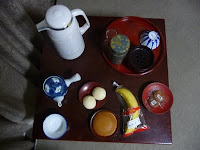
Ladies and gentlemen, supper tonight is brought to you by the equally wonderfully named and fonted convenience store of


And it looks a little like this:


On one of the nights that we were out with Nahoko from Miraikan, she recommended the Edo-Tokyo Museum as a good place to visit. I had already starred it in my pre-Japan Time Out and Lonely Planet guidebook scanning (thanks Torie, Hayden, Luke) and today was the day.

On the way out of the station I saw this poster and thought, oboy. I really hope THAT exhibition is on at the Edo Tokyo. And you know what?

It was.


This is the Edo-Tokyo museum. Pretty vast. I stood outside it and thought what people think when they arrive at Melbourne Museum: "Where do I get in?"


Having located a ticket counter and a lift and F1, I stood outside 'Beautiful Shin-hanga: Revitalisation of Ukiyo-e', took a deep breath and entered. 'Shin-hanga' means 'new print' and this exhibition tells the story of woodblock prints made from the Taisho to the early Showa periods (1915 - 1942) which were created using techniques developed through the Edo (1603 -1868) period.

In the latter Meiji period (1868 -1912), ukiyo-e (or woodblock prints) were being replaced as a means of image-making by photography. The ukiyo-e genre was in decline locally, although it had begun to generate interest overseas. Wanatabe Shozaburo, a dealer in ukiyo-e, was central
to the revival of this method of making images. He commissioned artists to make them, and shin-gawa as a form peaked from 1916-1923, at which time the great Kanto earthquake and subsequent fire puts a dent in things.

Charles W. Bartlett from the USA holds an exhibition of shin-gawa in New York in 1916.

There was beautiful work in there: the Edo-Tokyo link above has a few images, and you weren't allowed to take pictures, which is a good thing, so I took some quick sketches instead.

This head was from work by Sugiura Hisui, whose design sense was excellent.


The below is from an incredible image by Kawase Hasui, 'Snow at Zojoji Temple' (1922).


Another North American player in the story was Robert Muller who first sees shin-gawa in 1927 and is gob-smacked but gets his first opportunity to come over here and do some scouting in 1940 when he visits, as the text panel delightfully puts it, "...ostensibly for his honeymoon..." but returns to the US with a huge swag of shin-gawa. Below, the ostensible Mister and Mrs Muller check out some Tokyo art action. (Must have been a pretty interesting time for an American to be doing business in Japan, yes?)


I have to credit the National Gallery of Victoria with whetting my appetite for ukiyo-e: they had a great exhibition a few years ago which seems to linger as an online education program, but with lots of good images, here.


Oh, and the picture on the poster is called ' The actor Onoe Matsuke IV as Konori Yasu in the play Yowa Nasake Ukina no Yokogushi' and it was made by Yamamura Koka in 1917.


Then it was up to the 6th floor for the permanent exhibition, telling the story of the history of Tokyo. Above is a model of the facade of the Nakamawa-za Kabuki Theatre. Scale: 1/1. This place was an aeroplane hanger. If, like me, you didn't have much of a bead on Tokyo's history, let me give you my now very basic version.


This guy is Tokugawa Ieyasu (1543 - 1616). He builds a stronghold at Edo and establishes a warrior government, or bakufu. There's the shogun, the bushi (samurai), and the chonin (townspeople).


Then there's the Meiji Restoration in 1868, when Edo becomes Tokyo. Hey, I didn't promise details. Broad strokes! Broad strokes!


The guy below is the American who sails into Tokyo harbor at some point and says, well lookee here!


Aw forget all that facts stuff, you know why we're here --- dioramas!

Below, the chonin area around Nihonbashi Bridge, mid 17th century, scale 1/30.
There were even binoculars around the dioramas so you could see all the lttle people and little street dramas and events that were going on. Wow.


Below, the ohiroma (large chamber), matsu-no-roka (pine coridor) and shiroshin (white study) at Edo Castle, mid nineteenth century, scale 1/30.


At the bottom of this post (I can't seem to put movies mid-post) you will find a slide show tour of the residence of the daimyo of Echizen-Fukui, Matsudaira Iyo-no-kami Tadamasa (1567 - 1645), which was built in front of the Otemon Castle gate of Edo Castle. A huge complex which in the Meireki Fire of 1657 was razed to the ground.

Below, a picture of the 1/1 scale model of the offices of the newspaper Choya Shinbun, from around the 1870s-1880s. This 'Government and People's Newspaper' was founded in 1874 and was significant for its severe criticisms of the Meiji administration.

Below, a 1/30 scale model of the same area, the Ginza 'bricktown' from the same time period. The area had been burn to the ground by the Tsukiji fire of 1872. The Meiji government rebuilt, design supplied by British architect Thomas James Waters. I overheard a man explaining to his compainions that the design was an utter failure as the brick buildings became stifling in the Tokyo heat. The area was destroyed again by the Kanto earthquake of 1923.


This model, which was under our feet under glass, was amazing. I think it depicts a luxury residence constructed to receive honoured overseas guests. Anyway, every 10 minutes or so, some Strauss would strike up, the roof would slide back, and you could look into the ballroom where a circle of couples were waltzing!


This tower was built in 1890 by the British engineer William K Burton. Called Ryounkaku, or '12 stories', it was the first building in Japan with an elevator, contained shops and lounges and was also destroyed by the 1923 earthquake.


The dreadful 20th century was not kind to Tokyo. In 1923 came the 7.9 richter Kanto earthquake, followed by high winds which fanned dreadful fires. 71,000 people were lost, 44,000 in ONE PLACE, the army clothing depot at Ryogoku (the area where the museum stands today).
In World War II, the 'Pacific War' as I saw it referred to a couple of times, air raids on Tokyo began in 1942. On March 10, 1945, 100,000 people died as the result of one raid. This stuff hit me like a brick. As it should. I had to get out, I needed air.

***********************************************************
Another quest for the day had come up yesterday, talking to Skye. He had mentioned a Moomin cafe. A Moomin cafe? Would I be able to order Hattifatteners on toast? I had/hat to find it.

Clutching some admittedly fairly sketcky directions cobbled together from blog references that I'd found, I emerged out of Korakuen station, right next to the Tokyo Dome (or 'big egg' sports stadium and fun park) and followed my little map which got me here:
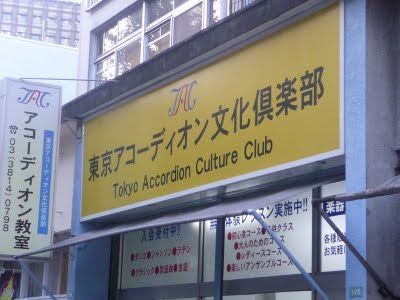


Really? That's NOT what I'm looking for. A bit downhearted, I listlessly walked along a very long wall until I came to somewhere that Moomins might go on holiday.
A beautiful park.


My spirits lifted. I had yearned, and Tokyo had provided. Not what I wanted, but something better.


I walked, saw the fish splash in the pond, I sat down. A leaf fell.


I lef the gardens and pretty soon found the Moomin cafe. Of course. And unsurprisingly, this was on the front table.

Now I don't think you'll be surprised to hear that the cafe is sort of underwhelming. BUT, there's some good transfers of Tove Jansson's art onto the walls.


And blow me down if that isn't Moominpapa up there in his boat suspended from the ceiling.


And various members of his extended family sitting around waiting for a drink.


Though I don't know, maybe it's me but they more remind me of creatures from the cantina at Mos Eisley in 'Star Wars'. Not the puppets themselves, but I dunno, it's something about the way they are sitting... their attitude.

And this was a BIG mistake: putting a picture of Snufkin on the piece of plastic that they attach the bill to... a Hemulen perhaps, maybe even the Groke, but Snufkin? Never...

Anyway, I went, I saw, I ate, I paid. I'm pretty sure that somewhere Tove (RIP) is rotating at such speeds she could probably generate enough electricity to power Greater Tokyo, but there you go.

**************************************************
On the way back to Shibuya (and THANK YOU helpful white gloved Tokyo Metro man at Korakuen who was SO KEEN to aid me with my public transport plans) I kept thinking about that scene in the movie 'Barton Fink', where Mad Man Munt (John Goodman) is giving the lowdown to Barton (John Turturro). Maybe it was the mosquito in my hotel room last night, I don't know, but the line keeps repeating in my head:


"You're just a tourist with a typewiter, Barton...


I have to LIVE here."

The tourist


The typewriter


Hm, maybe I should cut down on these long-winded posts.
It's obviously preying on my mind.
Still, If I did live here, I'd be able to get these from LAWSON
every
night.


And finally, the diorama slideshow as promised...

Thursday, November 5, 2009

I feel like a cigarette

This morning, after more hours sleep than I care to name (apologies to all those parents out there, and particularly to Susan), I stretched my rested limbs and sniffed ---tobacco? More specifically, tobacco ash. I hadn't noticed the smell when I nodded off but now it was definitely there, in the room. And actually the previous hotel, the Grand Pacific, smelled like this, but in the halls, not in the rooms.

It seems to me, with all of my one week's experience of the place, that Tokyo is a city giving up smoking. Not that people don't smoke, they do, walking along or (my personal favourite) riding their bike or eating in the smoking section of a restaurant. But you know, not many. Most indicative of this is the signed 'Smoking areas' on pedestrian street corners. I would like to take a snap of one of these but there are always people, you know, smoking around them and I'm concerned that they'll think I'm photographing them, like they're the last remaining examples of a dying breed.

Anyway with that eau d'ashtray tickling my nostrils, it was obviously the day to visit the Tobacco and Salt Museum.


I got a bit cocky and headed though a real bird's nest of twisting and turning narrow alleys crowded with hotels offering yen values for stays of 2, 3, 4 etc hours. This area is not exactly the famed 'Love Hotel Hill' but I am fairly sure that couples don't check into these places to enjoy a quiet game of backgammon. This street art was the first I've seen in town and so I shot it for my Melbourne spraycan mavens, Mark Holsworth and Michael Fikaris.


Locating the street called Koen-dori, I walked along slowly, looking for any sign of this museum. When I saw this bloke, nothing registered. I walked on. Past workmen taking large red wooden cases into a lobby.


And then I walked past this VERY pink cafe, noting the name (something along the line of ('Le bon plage') but not noting the sign on the brick wall behind it.


After I'd walked on for what felt like too long, I resolved to walk back even slowlier, when of course I noted the: 1) museum sign, 2) the red exhibition cases being carted in and 3) that the statue was some heavy nicotine user from America del Sud.
Inside the museum I immediately started feeling happy - if Tuesday at the National Museum of Nature and Science was my Natural History fix, then the Tobacco and Salt Museum was my Social History hit.
Below, Christopher Columbus asks the indigenous people of North America for a light.


This guy, 100mm tall and made of stone, was in the 'Uses of Tobacco In the New World'. The answer in his case was I think, 'As a drinking straw'.


In the same section, about the history of tobacco use, there was an amazing display of cigarette packs from around the world.


On the next floor we got into the Japanese tobacco story. It kicked off with this life-size diorama showing the wife rolling and the husband shredding the bitter leaf.


Of course, there were also several of these ladies. I've done something to this one's chin, but you get the idea.


The next floor told the story of salt production. Salt and tobacco are under the one roof because both industries were once run by the government. One of the things that I loved about this museum (and I loved it a lot) was that there was no fear about using dioramas, for instance to tell the story of salt harvesting a long time ago


and more recently.


I'd love to tell you more about the museum (for instance about the portrait gallery devoted to "The famous tobacco lovers in Japanese history'), but we've got to hurry if we're going to get to the statue of Hachiko in time to meet Skye Ogeden.


Hachiko used to go to Shibuya station every afternoon to wait for his master so that they could walk home together. After his master died, Hachiko turned up each day for another seven years, until he died himself. That was in 1935. There was huge interest in his story, the statue was put up, and these days, as a meeting spot, it's the Flinders' Street clocks of Shibuya station.
While waiting for Skye I was drawing the dog, who was wearing a silk sash, and many tourists were snapping away (as did I, but I'm afraid you're getting the drawing) when an older Japanese fellow came up to the statue, hoisted himelf up with some effort (the head would be 2 metres above the ground) and gave Hachiko an repectful, approving pat.
Beautiful.
Then Skye, who had been also drawing, tapped me on the shoulder and off we went. Ah, to be following a local, who has the language and their own twists and turns and favourite spots.


Skye assuring us all that the name of the place isn't his profession or anything. No folks, Skye Ogden is an artist working on video games, video clips and best of all, comic books.
We ate and dranks and talked about comics (making/editing/publishing) and Japan and Australia.


After she brought our food, the waitress took this shot of us, about to plunge into the plates before us.
In the midst of our conversation, this fellow landed on a rooftop above. A good omen I think: I hope Skye and I will be able to work together in some way in the future...


Skye took me to a manga place and gave a much-appreciated primer on artists, titles and formats. We got coffees and took them upstairs and watched the human traffic stream back and forth across Shibuya Crossing. And talked some more. Our conversation got me re-fired up about where comics culture is going, in Australia. Certainly it's choofing along pretty well right now, but/and this is certainly the time for artists and editors and publishers to really WORK, to push ourselves and make some great comics.


I waved goodbye to Skye and travelled homeward via Bunkamura, a classy shopping centre/arts centre (they do that a bit, here) and the post office. Above is my street, with Fukudaya at the end on the right.


Outside an apartment block, the bike parking. This one's for my dad, who I think would love the bike culture here. What do you think of those ramps, Salvatore?
Back in my room, the lovely Fukudaya folks had left the makings for green tea, so there was nothing for it but to brew up, feet up and draw a drawing.


Ah, if only I had a cigarette...